
Resources


Resources
Stay up to date with the latest news, opinions and free resources from Device Authority.
From company announcements, expert opinion on the latest IoT security issues or helpful guides to support your own organization, use our filters below to find the resources most useful for you.

Turning Strategy into Proof: Why We Created the Industry PoV
by Darron Antill, CEO Device Authority
Across the automotive industry, conversations around PKI and key management have moved from technical design discussions to board-level priorities.
Regulatory frameworks such as UNECE WP.29, ISO 21434, and the emerging EU Cyber Resilience Act are fundamentally reshaping how OEMs and supply chain partners must think about cryptographic control. At the same time, vehicle architectures are becoming increasingly software-defined, connected, and supply-chain dependent.
Blog
Read More
>

Device Authority gains more traction in the Automotive market with a new OEM and further expansion with existing Tier 1s as manufacturers accelerate OEM-owned key management for compliance and market growth.
Device Authority, a leader in identity and key lifecycle automation for connected devices, today announced it has secured a significant new automotive customer as well as expanded an existing automotive deployment, as manufacturers move to bring cryptographic key management under direct OEM ownership to strengthen cybersecurity, simplify mandatory compliance, reduce supply chain risk and comply with new market expansion.
News
Read More
>

The EU Cyber Resilience Act: What It Changes — and How Device Authority Helps Manufacturers Respond
The EU Cyber Resilience Act (CRA) establishes mandatory cybersecurity requirements for most products with digital elements placed on the EU market. It raises the baseline for secure-by-design/default engineering and, critically, makes post-market security support and evidence production a compliance obligation.
Blog
Read More
>
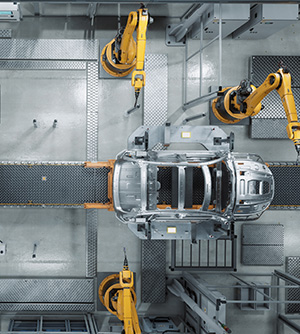
Cryptographic Key Management Is Becoming a Structural Constraint in Automotive – Download our Whitepaper
Automotive engineering teams are being asked to deliver faster, with less tolerance for failure.
Software-defined vehicle programmes, secure OTA rollouts, zonal and service-oriented architectures, and continuous feature delivery are now baseline expectations. In parallel, regulatory pressure is increasing — from WP.29 (R155/R156), ISO/SAE 21434, and the forthcoming EU Cyber Resilience Act — tightening requirements around software integrity, traceability, and lifecycle governance.
None of these forces are new in isolation. What is new is how they converge on an area that’s often under-designed: Cryptographic Key Management.
Blog
Read More
>

Agentless IoT Security: How to Secure Devices You Can’t Touch in 2026
Agentless IoT security enables identity-based protection for devices that can’t run software agents. Learn how it secures IoT and OT at scale.
Blog
Read More
>

Why Unmanaged IoT Devices Are the Biggest Security Blind Spot in 2026
The rapid expansion of connected devices has fundamentally changed how organisations operate. From smart sensors and industrial controllers to gateways, cameras, and embedded systems, IoT has become integral to modern business. Digital transformation is accelerating the adoption of IoT technologies, increasing the attack surface and making IoT security a critical component of modern cybersecurity strategies. Yet as these environments grow, a dangerous reality has emerged: many organisations no longer know exactly what is connected to their networks.
Blog
Read More
>

Trust Is the New Critical Infrastructure
For more than three decades, cybersecurity innovation and investment have followed a familiar rhythm. Each major wave—network security, endpoint security, identity, cloud, and data—spawned new platform winners and reshaped the M&A landscape. Today, we stand at the threshold of the next foundational shift. The digital and physical worlds have converged to such an extent that machines—not humans—are the primary operators of enterprise networks. They power manufacturing lines, drive vehicles, control energy infrastructure, guide medical systems, and increasingly act autonomously through embedded AI.
Blog
Read More
>

The State of IoT Identity Security in 2026: Why Machine Identity Is the New Perimeter
Explore the state of IoT identity security in 2026 and why machine identity automation is now critical for Zero Trust, compliance, and cyber resilience.
Blog
Read More
>
Calculating the IoT Security ROI in 2026
IoT identity security delivers measurable ROI. Learn how automation, risk reduction, and efficiency gains justify investment in 2025.
Blog
Read More
>